
Industrial Valve Guide
Check Valve Types & Selection Guide: Sliding Ball vs Swing Check
In short: a check valve lets water flow in one direction and closes automatically when flow reverses — no operator or power source needed. When the duty involves sewage, drainage or pump networks, ball-type check valves such as the HQ41X sliding ball and HQ44X spherical ball designs close quietly without slamming, which avoids the water hammer that swing check valves can cause. This guide compares the common types and tells you what to specify.

Sliding Ball Check Valve (HQ41X-16)
DN50-DN350, NBR ball, ~50% less head loss
Spherical Ball Check Valve (HQ44X-16)
DN50-DN400 PN16, nodular iron, non-slam

Wet Alarm Check Valve ZSFZ 150
DN100/150/200 sprinkler alarm check
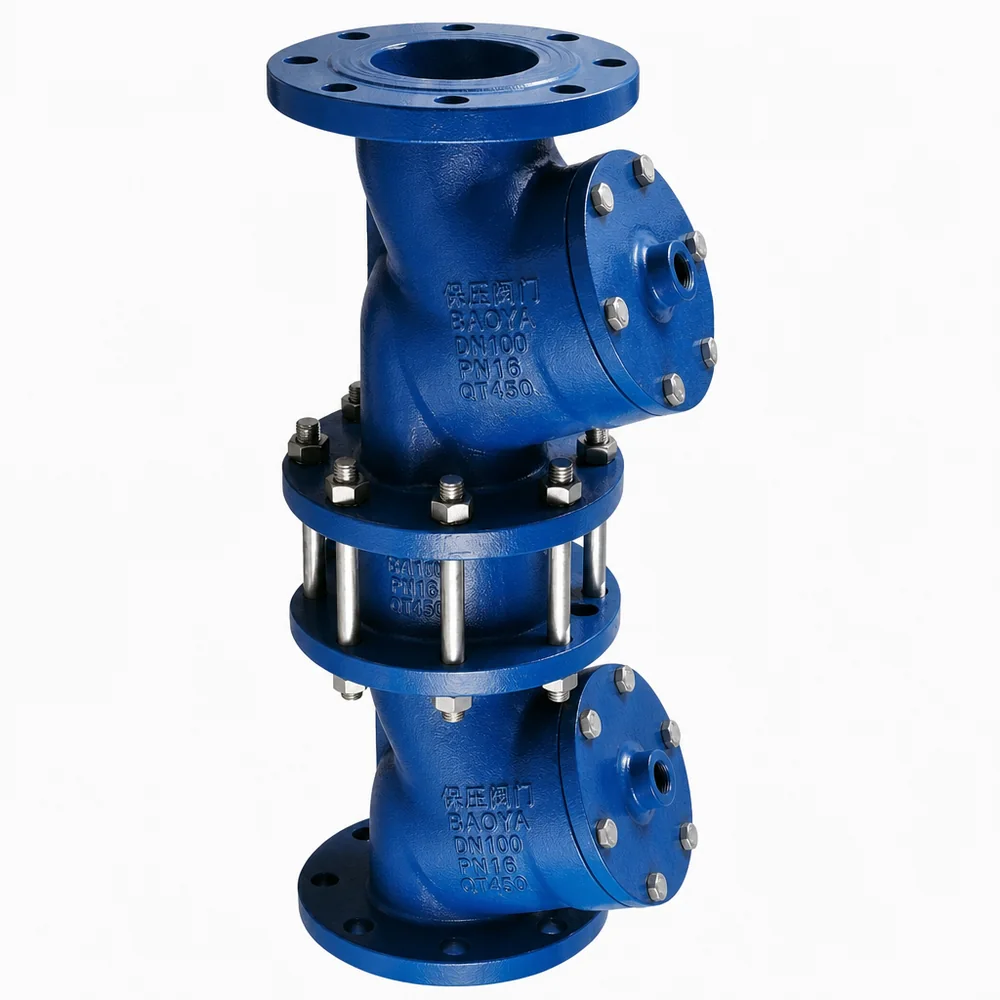
Anti-Pollution Backflow Preventer (HS41X-16)
Double check valves + drain for potable water
1. What Is a Check Valve?
A check valve is an automatic one-way valve. The flowing medium itself opens the closing member; when the flow stops or tries to reverse, the member returns to its seat and the valve closes. There is no handwheel, actuator or electrical connection — check valves protect pumps, meters and networks from reverse flow, keep lines full after shutdown, and prevent contamination from flowing backwards into a clean supply.
The two things that separate a good check valve from a bad one are pressure loss (how much of your pumping energy it wastes while open) and closing behaviour (whether it slams shut and hammers the line, or closes quietly). Both are decided by the closing mechanism — which is why the type choice matters.
2. Check Valve Types at a Glance
Swing check valves use a hinged disc that swings open with forward flow and falls back onto the seat when flow stops. They are simple and inexpensive, but the disc has a long travel path — on sudden flow reversal it can slam into the seat, and in dirty media the hinge can bind or the disc can hang open.
Lift check valves use a spring-loaded piston or ball that lifts off a seat. They close faster and suit clean, higher-pressure media, but the restricted flow path creates more pressure loss and they clog easily in sewage service.
Wafer (dual-plate) check valves are compact and fit between flanges, with two spring-loaded plates. They are light and cheap for fire and HVAC lines, but the plates add head loss and the springs can fatigue in continuous pumping duty.
Ball check valves replace the hinge or spring with a rolling rubber-covered ball. The ball lifts out of the bore on forward flow and rolls back onto the seat when flow stops — a short, guided travel that closes quietly and resists clogging. The HQ41X sliding ball check valve and the HQ44X spherical ball check valve are the two ball-type designs in the Wanlian range.
3. Sliding Ball vs Swing Check
| Comparison | Swing Check | HQ41X Sliding Ball | HQ44X Spherical Ball |
|---|---|---|---|
| Closing member | Hinged disc | Rubber-covered ball on internal guides | Rubber-covered rolling sphere |
| Head loss | Baseline | Full-port, ~50% less than swing check | Full-flow non-blocking channel |
| Closing behaviour | Disc can slam on fast reversal | Quiet closure, no water hammer | Silent non-slam, low start-up flow |
| Clogging resistance | Hinge can bind in dirty media | Ball prevents clogging | Anti-blocking full bore |
| Installation | Usually horizontal | Horizontal or vertical | Horizontal or vertical |
| Typical duty | Clean water lines | Sewage, drainage, submersible pumps | High-flow water, pump networks |
Both ball designs use a rubber-covered metal core: the HQ41X ball is carbon steel fully covered in NBR, while the HQ44X ball is a cast iron core with fully vulcanized EPDM. Seat and seal rubbers are EPDM or NBR, and working temperature is 0°C to 80°C across the standard range.
4. Water Hammer & Non-Slam Design
Water hammer happens when a column of moving water is stopped abruptly — a pump tripping, a valve closing fast, or a check valve slamming shut. The kinetic energy of the water converts into a pressure spike that can burst pipes, damage pumps and knock instruments off calibration. On long discharge lines the spike can be several times the working pressure.
A swing check valve is a classic slam source: when the pump stops, forward flow collapses and the heavy disc falls back through the decelerating column, slamming into the seat and sending a surge downstream. Ball-type check valves avoid the hinge entirely — the rolling ball follows the flow down smoothly and seats without impact. That is why the HQ41X and HQ44X are described as quiet-closure, no-water-hammer check valves.
For full surge control on pump networks, use the check valve together with slow-closing hydraulic control valves and an EN12845 suction vortex preventer on the pump suction, so both start-up and trip transients stay within safe limits.
5. Where Check Valves Are Installed
Pump discharge lines. Every pump needs a check valve downstream so that when the pump stops, water cannot flow backwards and spin the impeller in reverse — a common cause of premature pump failure. Ball checks with low head loss also save energy on continuous pumping duty.
Sewage and drainage mains. Raw sewage carries solids, and a hinged disc or spring mechanism can jam. The HQ41X was designed for exactly this service — the rubber-covered rolling ball prevents clogging, and the valve is excellent for sewage, municipal drainage and submersible pump networks.
Fire sprinkler systems. Check valves have a specific duty in sprinkler networks: the ZSFZ wet alarm check valve holds the system water back, then when a sprinkler opens and water flows it lifts the clapper and triggers the hydraulic alarm gong and pressure switch — a check valve that is also the flow alarm trigger. For the full picture of control valves in sprinkler systems, see our fire sprinkler control valve types guide.
Potable water cross-connections. Where tank water, irrigation or process water can theoretically flow back into a drinking water main, a single check valve is not enough protection. The HS41X anti-pollution backflow preventer uses two series-connected check valves with an intermediate automatic drain — the configuration required for genuine cross-connection control, covered in depth in our backflow prevention guide.
6. B2B Specification Checklist
- Know your media — clean water, sewage with solids, or fire water? Solids and fibres point to a ball-type check; clean high-pressure lines may tolerate a lift or swing type.
- Fix size and pressure — HQ41X covers DN50-DN350 at 1.0/1.6 MPa; HQ44X covers DN50-DN400 at PN16. State the DN and flange standard (GB, ANSI, DIN) in the enquiry.
- Check the installation orientation — confirm whether the duty is horizontal or vertical pipe; the HQ41X and HQ44X accept both, which swing checks often do not.
- Match ball and body materials to the water — NBR-covered carbon steel ball (HQ41X) or EPDM-vulcanized cast iron ball (HQ44X), with cast iron (HT200), spheroidal (QT450) or nodular (QT450-10) bodies; working temperature range is 0°C to 80°C.
- Ask about closing behaviour — if the line is subject to pump trips or fast valve closure, specify a non-slam, quiet-closure design to avoid water hammer.
- Require test evidence — shell and seat pressure test reports for the actual batch (the HQ44X is tested to GB/T13927), material certificates on request, and run our B2B valve sourcing checklist before committing to a manufacturer.
Frequently Asked Questions
How does the HQ41X sliding ball check valve work? +
The HQ41X uses a rubber-coated steel ball as the closing member. When flow moves forward, the ball rolls up on internal guides and the full bore opens; when flow stops or reverses, the ball rolls back onto the seat for a bubble-tight closure. Because the ball rolls instead of slamming on a hinge, the valve closes quietly with no water hammer and a lower pressure loss than a swing check of the same size.
What is the difference between the HQ41X sliding ball and HQ44X spherical ball check valves? +
The HQ41X sliding ball check valve covers DN50-DN350 at 1.0/1.6 MPa with a carbon-steel-core ball fully covered in NBR, rolling on integrated spheroidal guides; it is a standard choice for sewage and drainage duty. The HQ44X spherical ball check valve covers DN50-DN400 at PN16 with a nodular cast iron (QT450-10) body and an EPDM-vulcanized cast-iron ball, offering a full-flow non-blocking channel, low start-up flow and silent non-slam closing for high-flow lines.
Why choose a ball check valve over a swing check valve? +
Ball-type check valves are designed with a full-port bore and a rolling rubber-covered ball. Compared with a swing check, the HQ41X is designed to deliver about 50% less head loss, the rubber-covered ball prevents clogging, and closure is quiet with no water hammer. Ball checks can also be installed horizontally or vertically, which swing checks often cannot.
Can a check valve prevent water hammer? +
A non-slam check valve removes one cause of water hammer: the hinged disc of a swing check can slam into its seat when flow reverses suddenly, sending a pressure surge down the line. Ball-type check valves such as the HQ41X and HQ44X close quietly instead of slamming. For pump networks, combine them with slow-closing hydraulic valves and an EN12845 suction vortex preventer on the pump suction to control surge at start-up and trip.
Where should check valves be installed? +
Typical locations are pump discharge lines (to stop backflow spinning the pump), sewage and municipal drainage mains, submersible pump risers where vertical installation is needed, and fire sprinkler networks — where a wet alarm check valve such as the ZSFZ-150 doubles as the flow alarm trigger. At potable water cross-connections, an HS41X anti-pollution backflow preventer provides the double check-valve barrier required for backflow control.
What test standard and documentation should I request when buying check valves? +
Confirm the shell and seat testing standard applied to the batch — the HQ44X is tested to GB/T13927. Request the batch shell/seat pressure test reports and material certificates for the body and the ball core, and state the DN, pressure rating, working temperature and installation orientation in your enquiry so the quotation matches the actual duty.
Need Check Valves for Water, Sewage or Fire Lines?
Tell us your DN, pressure rating, media and installation orientation — our engineers confirm the right ball-type check valve and quote within 12 hours.