
Hydraulic Safety Equipment Guide
Backflow Prevention in Fire Protection & Potable Water Networks
A single contaminated backflow event can shut down a municipal supply, poison a fire reserve tank, or void the potable-water approval of an entire building. Backflow preventers sit at the point where non-potable systems — sprinkler mains, irrigation, boilers, process lines — connect to drinking water. This guide explains the hazard classes, how a double check assembly works, and how to size and specify the right device for your project.
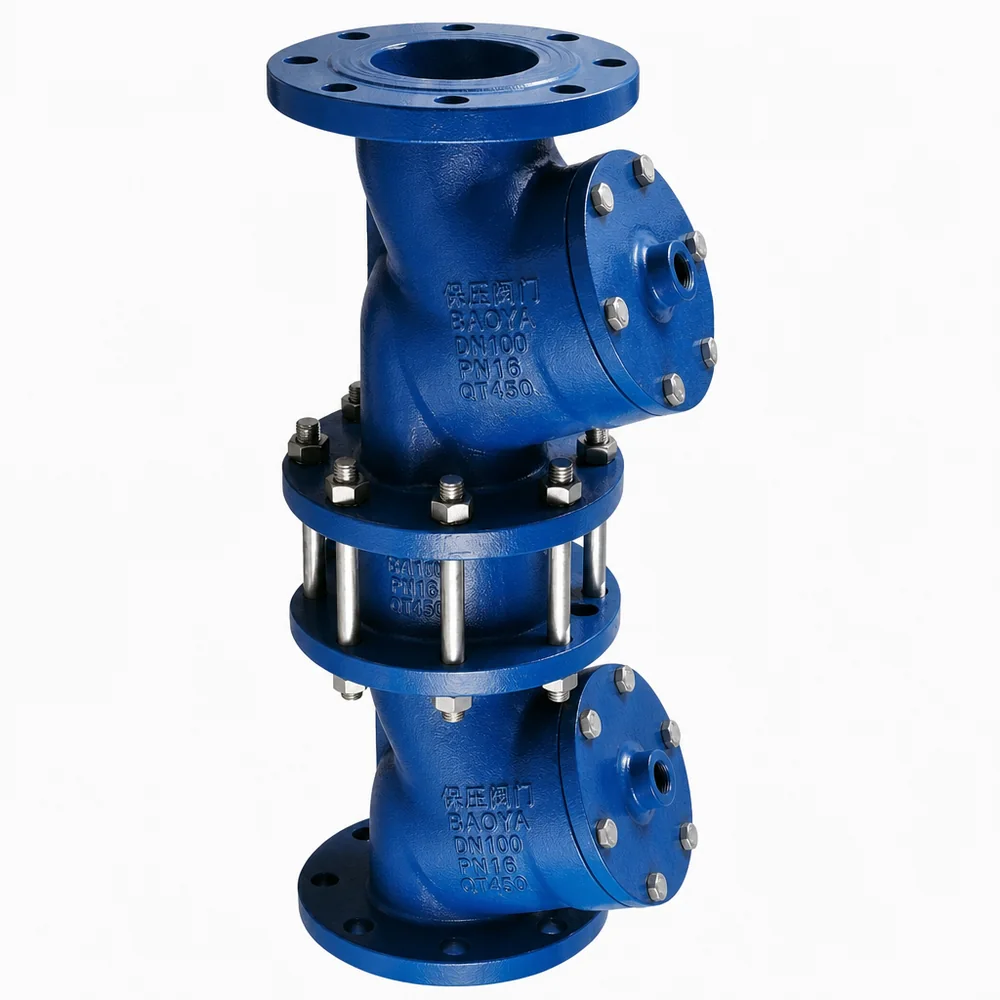
HS41X Anti-Pollution Backflow Preventer
Double check valve assembly with automatic intermediate drain

500X Hydraulic Pressure Reducing Valve
Self-operated pilot pressure control, no external power
F745X Water Level Control Valve
Float pilot level control for reservoirs and tanks
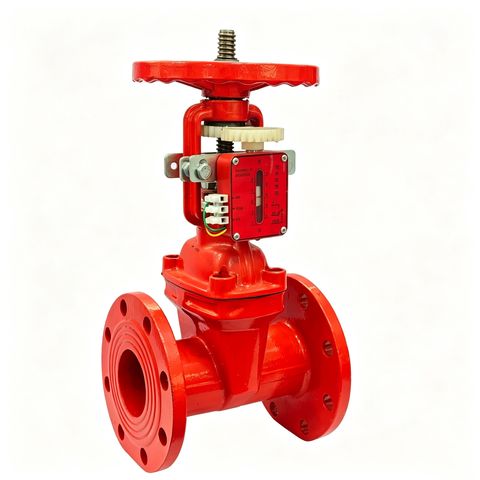
GKZF-1 Solenoid Control Gate Valve
Electrically piloted groove valve for automated networks
1. Why Backflow Prevention Matters
Backflow occurs when the pressure in a non-potable system exceeds the supply pressure (back-pressure) or when a supply main loses pressure and siphons water backwards (back-siphonage). In a building that combines drinking water with a fire sprinkler system, the sprinkler main is a permanent cross-connection: stagnant water, corrosion products and biofilm live in the fire main, and any pressure transient can push that water into the potable supply.
Regulators worldwide treat this as a public-health issue, not an equipment preference. European practice (EN 1717) classifies fluids by contamination risk and mandates protection devices accordingly; North American practice follows AWWA M14 cross-connection control and the local plumbing code; China applies GB 50084 (sprinkler) and GB 17051 alongside local water-supply regulations. In nearly every framework, a fire-protection connection to potable water requires at least a double check valve assembly, and often a reduced pressure zone device for higher hazard classes.
2. Hazard Classes and Device Types
The protection device is selected from the hazard class of the connected system. The table below summarises the common classes and the devices typically accepted:
| Hazard class | Typical connection | Typical device |
|---|---|---|
| Low (Fluid 2) | Cold water, non-toxic, no health risk | Single check / air gap |
| Medium (Fluid 3) | Fire sprinkler mains, heating loops, grey water | Double check assembly (HS41X) / DCVA |
| High (Fluid 4) | Chemicals, sewage, industrial process fluids | Reduced pressure zone (RPZ) assembly |
| Very high (Fluid 5) | Pathogenic or radioactive media | Air gap separation (no mechanical device) |
Fire-protection connections are almost always medium hazard (Fluid 3), which is why the HS41X anti-pollution backflow preventer — a double check assembly with an intermediate drain chamber — is the workhorse device in this application.
3. How the HS41X Double Check Assembly Works
The HS41X consists of two independent check valves connected in series with a drainage cavity between them. In normal flow, water passes both checks and the cavity stays dry. If the supply pressure drops below the downstream pressure, both check valves close. Should the first check leak, the cavity fills and the intermediate automatic drain opens to atmosphere, discharging the contaminated water visibly — the classic "leak before failure" design that makes double check assemblies testable and reliable.
Key construction points of the Wanlian HS41X-16: a ductile iron (QT450) body with epoxy coating for municipal and industrial environments, EPDM seat encapsulation for a positive shut-off, and stainless steel 304 internals in the check and drain mechanisms. Sizes run from DN50 to DN600, with pressure classes PN10 / PN16 / PN25, covering most building and utility service connections.
4. Backflow in Fire Protection Mains
A fire sprinkler or standpipe system connected to the potable main is the textbook medium-hazard cross-connection: the fire main is normally stagnant, contains corrosion by-products and may hold stagnant water for years between tests. The backflow preventer is installed on the fire-service connection, upstream of the fire pump suction or the system riser.
Two design points matter in fire systems:
- Pressure loss budget. The device sits in the fire pump suction line or the domestic/fire split; its head loss must be included in the hydraulic calculation. A low-loss double check design keeps the loss to roughly 0.5–1.0 bar at design flow.
- System pressure. For risers fed by a fire pump, confirm the pump discharge pressure stays within the device's rated working pressure (HS41X: PN16 or PN25). Oversizing by DN number alone is not enough — verify flow and loss together.
Where the same network also needs pressure management — e.g. a tank-fed sprinkler system with a booster — the backflow device works upstream of other hydraulic control valves such as the 500X pressure reducing valve, which protects downstream components from over-pressure while the check assembly protects the supply.
5. Sizing and Head-Loss Considerations
Size a backflow preventer on flow velocity and head loss, not on pipe diameter alone. The device must handle the worst-case flow — for a fire connection, the largest single sprinkler demand or hydrant flow; for a building service, the sum of simultaneous domestic and fire demands. Oversizing increases the risk of noisy, unstable check operation at low flow; undersizing starves the system under demand.
Selection checklist:
- Determine the maximum design flow (L/s or m³/h) and the residual pressure required downstream.
- Confirm the hazard class and the device type required by the local authority.
- Select the DN size where the design flow keeps velocity below ~2.5 m/s through the assembly.
- Request the head-loss curve for that size and add the loss to the hydraulic calculation.
- Confirm connection type (flanged/grooved), material for the medium, and any third-party test requirements.
Wanlian manufactures the HS41X with flanged or grooved ends and can provide the flow-vs-loss curve for your nominated size. Ask our engineers to check the hydraulic calculation with you before ordering.
6. HS41X vs Other Hydraulic Control Valves
Backflow prevention is one function in the wider family of hydraulic control valves. They are often specified in the same valve room, so it helps to keep the roles straight:
| Valve | Function | Typical position |
|---|---|---|
| HS41X Backflow Preventer | Stops contamination backflow, dual check + drain | Service connection / fire main inlet |
| 500X Pressure Reducing Valve | Maintains constant downstream pressure | After the meter / zone supply |
| F745X Level Control Valve | Maintains tank/reservoir water level | Tank inlet, roof tanks and reservoirs |
| GKZF-1 Solenoid Control Valve | Remote on/off control via DC24V/AC220V | Automated mains and zone valves |
In a typical pump room you will see them in sequence: backflow preventer at the service entry, pressure reducing valve downstream for pressure zones, level control valves on tank fills, and solenoid valves where the network is automated. Specifying them as a package — as Wanlian manufactures them — avoids compatibility issues between pilots, trims and pressure classes.
7. Testing, Maintenance and Compliance
A backflow preventer only protects while it is functioning, so most codes mandate periodic testing by a certified tester. For double check assemblies the standard test verifies both checks hold at least 1.0 bar without leakage and the intermediate drain chamber operates. Typical intervals: annual for commercial installations; more frequent where the local water authority requires it.
- Keep the device accessible — test cocks and the drain chamber must be reachable for a test kit.
- Check the drain discharge — continuous dripping from the intermediate chamber means a check is leaking; repair before the next test.
- Protect from freezing — outdoor installations in cold climates need insulation or a heated enclosure; internal ice can crack the body and seals.
- Maintain spare seals — EPDM seat kits and check assemblies are wear parts; keep kits in stock to avoid extended downtime.
Wanlian can build test-cock configurations, flanged or grooved ends, and spare seal kits into the initial order. All HS41X units are 100% pressure tested before shipment in accordance with GB/T13927, with test reports provided per batch.
Frequently Asked Questions
When is a backflow preventer legally required? +
Whenever a non-potable system connects to a potable water supply. Typical mandatory points: fire sprinkler and standpipe connections, irrigation systems, boiler make-up lines, cooling towers and industrial process water. Most jurisdictions apply cross-connection control codes based on AWWA M14, EN 1717 or national plumbing codes — confirm which hazard class your connection falls into with the local water authority.
What is the difference between a double check valve and a reduced pressure zone (RPZ) assembly? +
A double check valve assembly (DCVA) such as the HS41X provides two independent check valves plus an intermediate drain chamber, and is the standard choice for fire protection and low-to-medium hazard connections. An RPZ assembly adds a relief valve that discharges if the zone pressure drops, protecting against back-siphonage of high-hazard contaminants — it is required for sewage, chemical and other high-hazard cross-connections, and needs annual testing.
Does a backflow preventer cause pressure loss in the fire main? +
Yes, every backflow device adds head loss. A well-designed double check assembly typically adds 0.5–1.5 bar at design flow. The fire pump and hydraulic calculations must include the device loss, or downstream sprinklers may not reach their required residual pressure. Provide the flow rate and we will supply the head-loss curve for the HS41X in your size.
Can the HS41X be installed horizontally or vertically? +
The HS41X double check backflow preventer is designed for horizontal installation in the flow direction marked on the body, with the intermediate drain chamber positioned below. For vertical risers, confirm the orientation with our engineers — some sizes can be installed vertically with the flow upwards when the internal drain arrangement allows it.
How often must a backflow preventer be tested? +
Typical testing intervals: annual testing for double check assemblies and RPZ devices in commercial systems, and more frequent (quarterly to semi-annual) for high-hazard connections or where local regulations require it. A test kit checks the check valves hold at 1.0 bar without leakage and that the intermediate chamber drains correctly.
Need a Backflow Preventer Specified for Your Network?
Send us your DN, pressure class, connection type and design flow — our engineers reply with the head-loss curve, technical datasheet and quotation within 12 hours.