
Industrial Fire Suppression Guide
Fire Water Cannon Buying Guide: Fixed, Remote or Smart? (2026)
A fire water cannon is a high-flow monitor that throws a concentrated jet 50–110 metres — the suppression tool of choice for petrochemical plants, tank farms, terminals and large warehouses where sprinklers cannot reach. The buying decision comes down to four questions: fixed or controllable, what flow, what range, and does it need to think for itself. This guide walks through each.
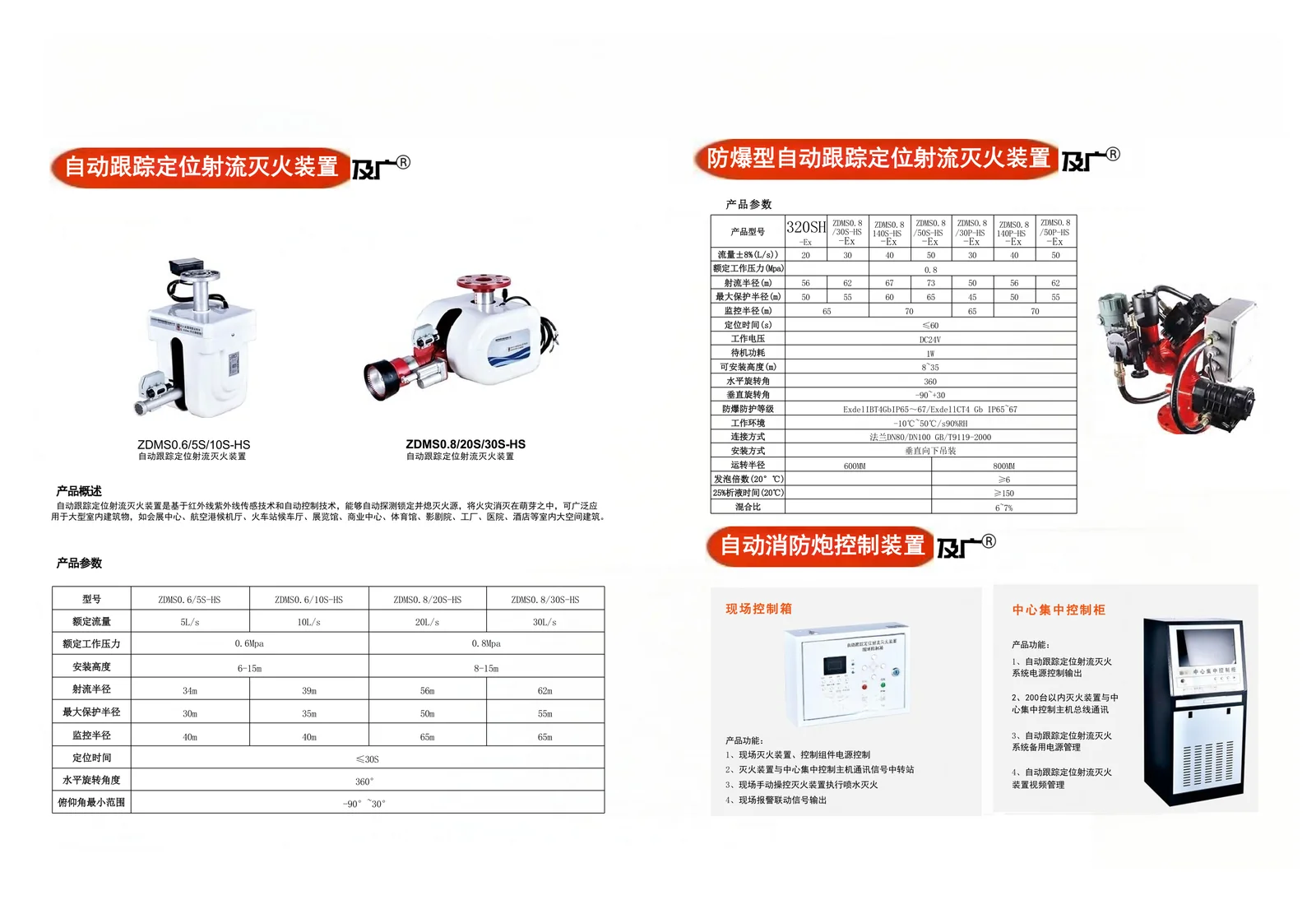
Auto-Tracking Cannon (ZDMS)
IR/UV detection, 5–150 L/s

Manual Water Cannon (PS)
20–200 L/s, up to 110 m
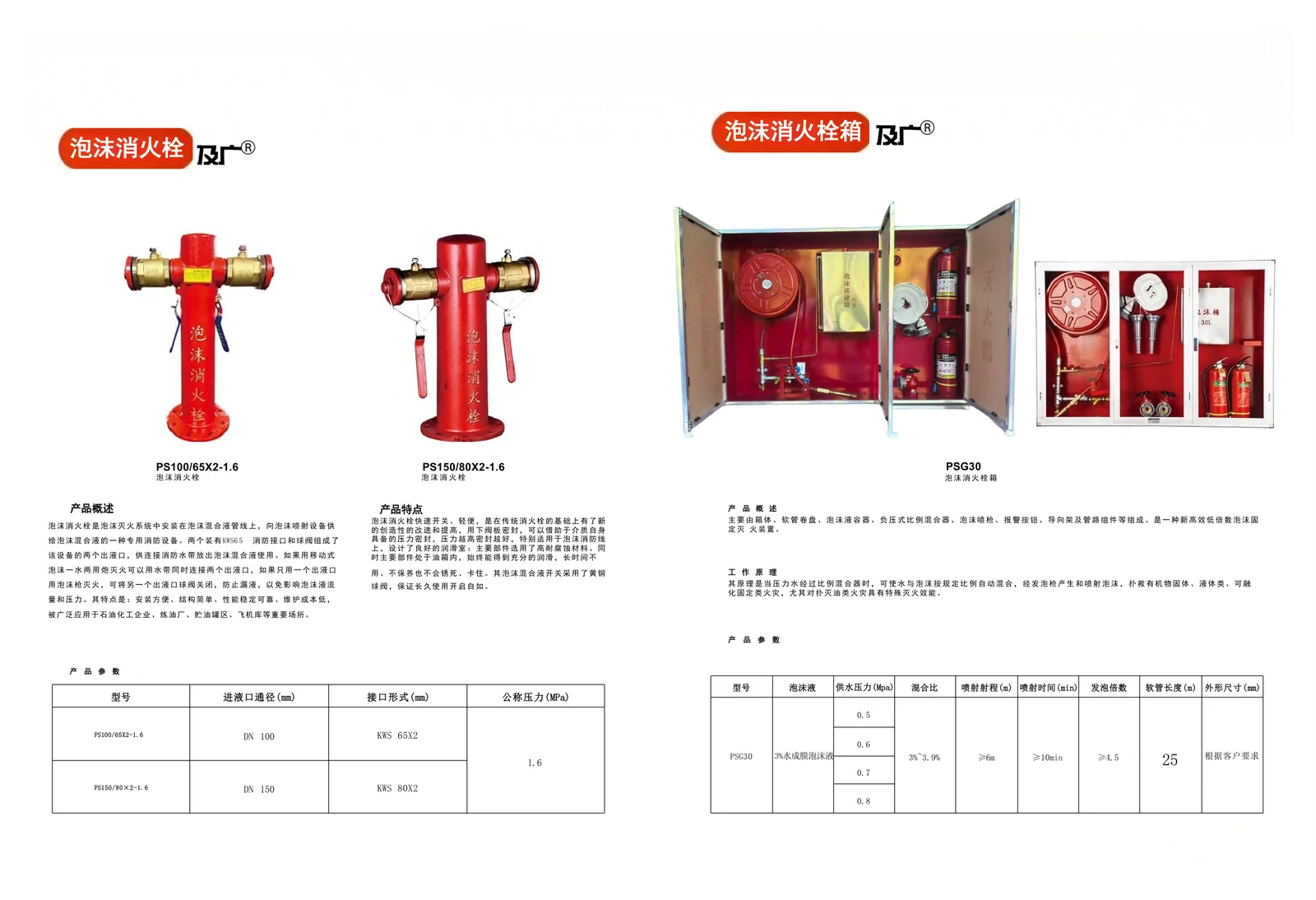
Foam Cabinet (PSG30)
3% AFFF for fuel/chemical fires
1. Do You Actually Need a Water Cannon?
Water cannons earn their cost in three situations: large open areas (warehouses, atriums, hangars) where fixed sprinklers would need impractical densities; outdoor hazards (tank farms, loading racks, process units) where there is no ceiling to mount sprinklers; and high-value risks where fast, concentrated suppression beats widespread water damage. If your site is an enclosed, standard-occupancy building, a sprinkler system is likely the right answer instead — see our sprinkler systems page.
2. Fixed, Remote or Auto-Tracking?
| Type | How it operates | Best for |
|---|---|---|
| Fixed monitor | Manual lever aiming, self-locking gear holds position | Sites with operators on duty; cost-effective baseline |
| Remote-controlled | Wired/wireless control from safe distance, 360° rotation | Hazards too close for manual operation |
| Auto-tracking | IR/UV flame detection, autonomous aim and jet in ~30s | Unmanned areas, 24/7 risk, fast response requirements |
The ZDMS auto-tracking cannon combines infrared and ultraviolet sensing to confirm a real flame before it acts — reducing false triggers — and supports manual override from a PC, mobile app or central cabinet. The PS manual series remains the dependable low-cost workhorse where operators are present.
3. Sizing Flow and Range
Two numbers define a cannon's capability: flow (L/s) and jet range (m). Flow is set by the hazard and the firewater demand calculation; range is set by inlet pressure and nozzle design.
- Warehouses & atriums: 5–30 L/s cannons, monitoring radius 40–65 m — the ZDMS sweet spot.
- Tank farms & process units: 30–200 L/s with jet ranges to 110 m — the PS series range.
- Foam hazards: specify foam proportioning or a packaged unit like the PSG30 foam cabinet for class B risks.
Rule of thumb: if you cannot confidently size the flow, send the site layout and firewater demand to the supplier — the correct model follows from the hazard, not from a catalogue page.
4. Control and Integration
Auto-tracking cannons are only as useful as their integration: they should link to the fire alarm panel, and the manual override path (local cabinet or remote station) must be tested with your operators. Check the communication interface, the explosion-proof rating if the cannon sits in a classified area (Exde II BT4 Gb is available), and the IP rating for outdoor exposure.
5. Procurement Checklist
- Define the hazard and firewater demand; confirm cannon flow and range with the supplier.
- Choose control mode: fixed, remote or auto-tracking — match to staffing and response time.
- Confirm media compatibility (water only, or foam proportioning).
- Check explosion-proof and IP ratings for the installation environment.
- Request the full-loop package: cannon, valves, couplings, hydrants — one BOM, one factory.
- Clarify MOQ, lead time, installation support and spare parts in the commercial offer.
Explore Our Fire Water Cannon Range
Compare fixed, remote and smart models with full specifications on the fire water cannon page.
Related Guide: Manual vs Auto-Tracking
Need a head-to-head technical comparison of manual (PS) and auto-tracking (ZDMS) monitors? See the Fire Water Monitor Selection Guide.
Frequently Asked Questions
When do I need a fire water cannon instead of standard sprinklers? +
Water cannons suit large open or high-ceiling spaces where sprinkler coverage is impractical: petrochemical process areas, oil and LNG tank farms, loading terminals, aircraft hangars and large warehouses. They deliver a concentrated high-flow jet over 50–110 metres, controlled manually, remotely or automatically.
What flow rate and range do I need? +
Flow follows the hazard: 5–30 L/s suits warehouse and atrium protection, while 30–200 L/s serves tank farms and process units. Range depends on inlet pressure — typically 50–110 m at rated flow. Send your site layout and our engineers will size the model.
Remote-controlled or auto-tracking cannon — which should I choose? +
If an operator can be present, remote-controlled models give flexible manual override at a safe distance. For unmanned or 24/7-risk areas, auto-tracking cannons with IR/UV detection detect, aim and jet within 30 seconds without human intervention.
Can water cannons be used with foam? +
Yes. Our PS series supports both water and foam media, and foam proportioning can be integrated for class B (liquid fuel) hazards. The PSG30 foam cabinet is a complete packaged option for smaller fuel and chemical risks.
Do you supply the cannon with the full system — valves, couplings, pumps? +
Yes. We manufacture the cannon on our own production lines and ship it together with matched valves, couplings, hydrants and accessories for the complete suppression loop, so your order arrives as a single-factory package.
Need a Water Cannon for Your Site?
Send us your site layout, required range and flow — our engineers recommend the right model and reply with a full quotation within 12 hours.