
Fire Protection Equipment Guide
Fire Hose Reel & Fire Cabinet Selection Guide
Hose reels and fire cabinets are the equipment a building occupant actually uses in the first minutes of a fire — before the fire brigade arrives. They must be simple enough for untrained staff, robust enough for years of standby, and specified to deliver the required jet at the required pressure. This guide walks through hose specifications, nozzle modes, foam options, materials and the codes that govern them.
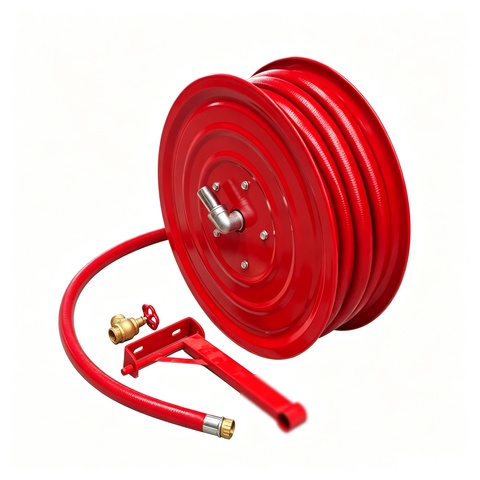
JPS0.8-19 Fire Hose Reel Set
Carbon steel reel, 20-30m PVC hose, brass nozzle
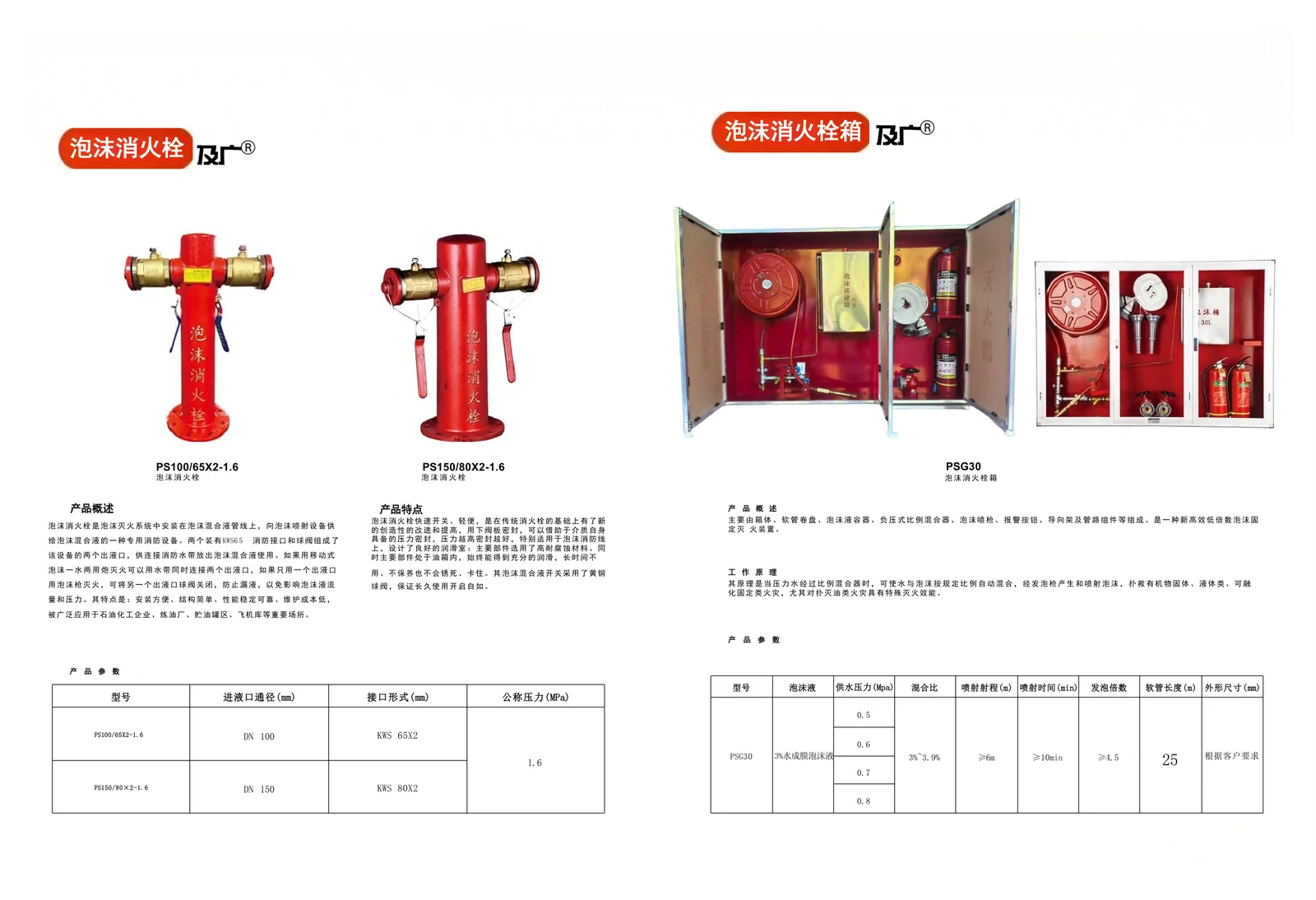
PSG30 Foam Fire Cabinet
Consolidated 3% AFFF foam unit for Class B fires

Indoor Fire Hydrant Head SN65
PN16 ductile iron hydrant valve for cabinets

HS Hose Coupling Adapter
Aluminum couplings for hydrant-hose-nozzle connections
1. The Role of Hose Reels and Cabinets
A fire hose reel gives an untrained occupant a fixed-water suppression capability: open the valve, pull out the hose, and a stream is available immediately. It is the first line of defence for incipient fires in commercial, hospitality, office and industrial buildings, complementing automatic sprinklers which handle suppression while occupants evacuate. Fire cabinets organise the equipment — hydrant valve, hose, reel, nozzle — into a predictable, accessible unit that inspectors and users can both rely on.
For B2B procurement, the practical questions are: what coverage does the code require, what supply pressure is available, and what fire classes exist on site. Those three answers drive the specification below.
2. Hose Reel vs Fire Cabinet: Definitions
| Unit | What it contains | Typical use |
|---|---|---|
| Hose reel set (JPS0.8-19) | Swivel bracket, drum, layflat hose, nozzle | Standalone stations, water supply connected |
| Hydrant cabinet | SN65 valve + reel/hose + nozzle in an enclosure | Standard indoor firefighting stations |
| Foam cabinet (PSG30) | Foam tank + proportioner + hose reel + foam nozzle | Class B liquid-fire areas |
The JPS0.8-19 reel set is the core component; the SN65 indoor hydrant head is the valve interface that feeds it from the standpipe, and the HS coupling adapters standardise the hose-to-hydrant and hose-to-nozzle connections.
3. Hose Length, Diameter and Pressure
Three numbers define a reel: hose length, internal diameter and working pressure.
- Length (20 / 25 / 30 m). Determined by the coverage radius. Codes such as EN 671-1 require every point of the protected area to be within the reel's reach, commonly defined as the hose length plus a nominal nozzle throw. Longer hose raises friction loss, so the pressure calculation must follow the length.
- Diameter (19 mm / 3/4"). The standard indoor reel bore. Larger bores deliver more flow but heavier hose that is harder for occupants to pull; 19 mm balances reach and ease of use for Class A incipient fires.
- Pressure (0.8–1.0 MPa). The JPS0.8-19 operates at 0.8–1.0 MPa with a jet range of at least 6 m. Confirm the standpipe or supply pressure at the reel inlet under simultaneous demand — a common failure is specifying a reel where the hydraulic calculation was never run.
For export projects, specify the hose standard (EN 694 for Europe, NFPA 1962 for North America, GB 15090 / XF180 for China-based certification) so the documentation package matches your market.
4. Nozzle Types and Jet Modes
The nozzle is the user interface — it decides whether an occupant can fight the fire at all. Reel nozzles support two modes:
- Straight jet. Maximum reach for attacking a fire from a distance. Required minimum reach is typically 6 m at rated pressure.
- Spray/fog. A wide cone for shielding the operator, cooling the area and wetting surfaces. Spray mode consumes more air and is less efficient at distance, so the operator switches modes by situation.
Material matters: brass nozzles resist corrosion and hold their geometry; die-cast alloy nozzles are lighter but specify anodised finishes for humid or coastal environments. The JPS0.8-19 ships with a brass/alloy spray nozzle supporting both modes, with a shut-off handle so the flow can be stopped at the nozzle.
5. Foam Cabinets for Class B Fires
Water cannot extinguish a burning liquid: it spreads the fire. Where Class B hazards exist — fuel storage, chemical process areas, transformer rooms, paint and solvent stores, vehicle depots — the code calls for foam. The PSG30 foam fire cabinet consolidates the whole system in one wall-mounted unit: a foam concentrate tank, a 3% AFFF proportioner, a hose reel and a foam nozzle.
When the reel is opened, the proportioner inducts foam concentrate into the water stream at 3%, generating low-expansion foam with an expansion ratio of at least 4.5:1 and a jet range of 6+ metres. Low-expansion foam blankets the burning liquid surface, cutting off oxygen and vapours — effective on fuel, chemical and solvent fires.
Specification notes for foam cabinets:
- Foam type. AFFF (aqueous film forming foam) is the standard for mixed hydrocarbon hazards; confirm the concentrate class (AR-AFFF for polar solvents) with the fire consultant.
- Capacity. Match the tank volume to the expected discharge duration — check the local code for minimum run time at rated flow.
- Inlet pressure. PSG30 works at 0.5–0.8 MPa; the supply must sustain this during discharge.
6. Materials and Corrosion Resistance
Standby equipment lives for years in humid corridors, boiler rooms and coastal plants. Material selection is a lifecycle cost decision:
- Reel drum and bracket. Cold-rolled carbon steel with anti-corrosion red powder coating (JPS0.8-19) — economical and code-standard; specify stainless steel for marine or chemical environments.
- Hose. NBR/PVC blends with multi-braided polyester reinforcement resist kinking and abrasion; confirm UV stability if the reel is in direct sunlight.
- Nozzle and proportioner. Brass for corrosion resistance and precise metering; the PSG30 proportioner is solid brass with a corrosion-resistant body.
- Cabinet housing. Powder-coated steel is standard; glazed or stainless fronts are used in architecturally rated lobbies. Always specify a breakable-glass or keyed access matching the local fire brigade's preference.
7. Codes, Testing and Export Notes
Hose reel and cabinet compliance is typically verified by: pressure testing of the assembly, jet-range and flow testing at rated pressure, and material/coating inspection. Relevant standards include EN 671 (Europe), NFPA 14 (North America, standpipe and hose systems), GB 15090 and XF180 (China), plus BS 5306 for UK practice.
Export checklist:
- Confirm the hose coupling standard for your market — the HS series adapters cover common international couplings (BS336, NIST, KWS) and can be shipped with the order.
- Request the batch pressure test report for the reels and cabinets.
- Verify the cabinet door access type and signage match local fire brigade expectations.
- For foam units, confirm the concentrate type and expiry handling — AFFF concentrate has a shelf life and must be replaced on schedule.
- Clarify spare parts (nozzles, hose, seals, test cocks) and lead time before ordering.
Wanlian tests every reel and cabinet before shipment, and provides the documentation package — pressure test reports, material certificates and operating instructions — with the container.
Frequently Asked Questions
What is the difference between a fire hose reel and a fire hose cabinet? +
A fire hose reel (such as the JPS0.8-19) is a permanently connected, semi-automatic suppression unit: a reel with a flexible layflat hose that draws water directly from the building supply. A fire cabinet is the enclosure that houses the reel, hydrant valve, hose and nozzle — or, in the case of a foam cabinet (PSG30), a self-contained foam proportioning unit. Many projects specify a hydrant cabinet containing both the SN65 hydrant valve and a hose reel.
What hose length and diameter should I specify? +
Indoor hose reels are typically supplied with 20 m, 25 m or 30 m of 19 mm (3/4") layflat hose. The required length is set by the coverage radius of the reel station — building codes commonly require every point of the floor area to be within reach of a reel (e.g. within 6 m of the nozzle throw). Confirm the code in force (NFPA 14, EN 671, GB 15090 / XF180) for your market.
When should I choose a foam fire cabinet instead of a water reel? +
Foam units (PSG30 with 3% AFFF) are specified where Class B flammable liquid fires are expected: fuel storage, chemical plants, paint shops, transformer rooms and vehicle depots. Water is ineffective on burning liquids; low-expansion foam blankets the surface and smothers the fire. For general commercial occupancy with only Class A fire loads, a standard water hose reel is sufficient and cheaper.
What pressure does a hose reel need to operate? +
The JPS0.8-19 reel operates at 0.8–1.0 MPa with a jet range of at least 6 metres. The building supply or fire pump must deliver this pressure at the reel inlet during demand. If the supply is marginal, add a booster or confirm the nozzle pressure with the hydraulic calculation — a reel that cannot reach 6 m is not code compliant.
Are hose reels and cabinets available in export-compatible configurations? +
Yes. Wanlian manufactures reels with 20/25/30 m hose lengths, brass or alloy nozzles, rotary wall brackets, and cabinets with matching hydrant valve interfaces (SN65 or BS336 couplings via the HS series adapters). Specify your market standard and we will match the connection and documentation package.
Need Hose Reels or Cabinets for Your Project?
Send us the coverage area, supply pressure and fire classes — our engineers reply with a reel/cabinet layout recommendation and quotation within 12 hours.